Surface Water Flowing Toward the House
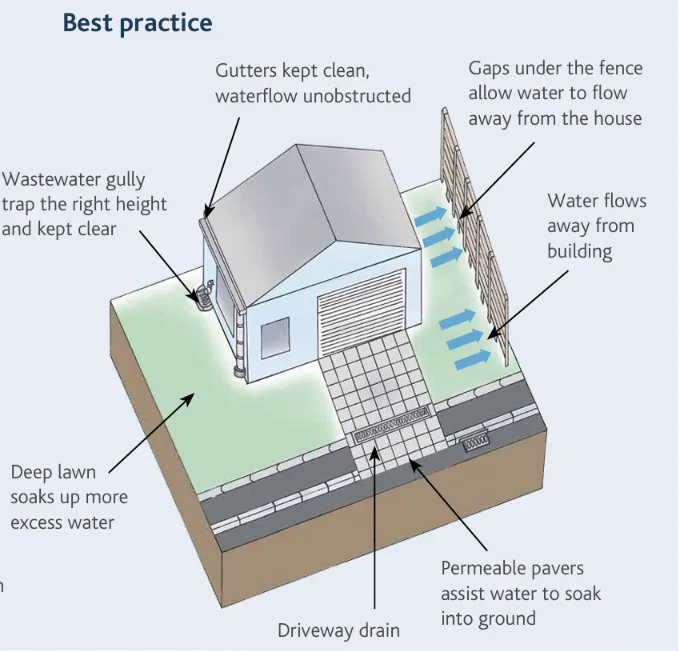
Surface water should generally be directed away from a house where practical. When ground levels, paths, driveways or landscaping direct water toward the building, this may increase moisture risk around foundations, exterior cladding and subfloor areas.
During a visual, non-invasive inspection, visible drainage and the slope of the ground around accessible areas can be reviewed to help buyers understand whether surface water management may require further attention.
Last updated:
What this defect means
Surface water flowing toward the house means rainwater or ground runoff appears to move toward external walls, foundation areas, subfloor vents, garages, lower cladding or entry thresholds rather than away from the building.
This does not automatically mean there is internal damage, but it is a visible moisture-risk indicator that should be considered in the overall property condition.
Why it may matter for buyers
For buyers, poor surface water control may contribute to damp subfloor conditions, moisture staining, cladding deterioration, timber decay risk, dampness near the foundations or increased maintenance requirements.
It may also indicate that landscaping, paving or drainage has changed over time and is now directing water toward vulnerable building areas.
Common visible signs
Common visible signs may include:
- Ground sloping toward the house
- Paving or driveways falling toward external walls
- Ponding near foundations
- Damp soil beside the house
- Water staining at lower cladding or concrete edges
- Blocked or low subfloor vents
- Garden beds built up against cladding
- Moss or algae growth near wall bases
- Surface runoff paths visible after rain
Possible causes
Possible causes may include:
- Poor site grading
- Settlement of paving or paths
- Landscaping built up too high
- Inadequate drainage channels
- Blocked drains or channels
- Downpipes discharging near the house
- Driveways or concrete areas without suitable fall
- Alterations made after original construction
What a visual inspection can and cannot confirm
A visual, non-invasive inspection can identify visible surface water patterns, the slope of the ground, ponding areas and visible signs of moisture risk in accessible areas observed at the time of inspection.
It cannot confirm underground drainage performance, concealed foundation condition, internal wall cavity moisture, or how the site performs during heavy rain unless further specialist assessment or drainage testing is carried out.
Recommended next steps
Where surface water appears to flow toward the house, the recommended next step is to review whether water can be redirected away from the building. This may involve clearing drains, improving the slope of the ground, adjusting landscaping, adding drainage channels or obtaining advice from a suitable drainage specialist.
Buyers may wish to understand the likely scope and priority of drainage improvements so the issue can be considered in context with the overall inspection findings and any further specialist advice obtained.
When further specialist advice may be appropriate
Further specialist assessment may be appropriate where:
- Water ponds against the house
- The site slopes significantly toward the building
- Subfloor dampness is present
- Lower cladding is close to soil or paving
- Internal moisture signs are visible nearby
- Drainage systems are blocked, missing or unclear
- Retaining walls or driveways are affecting water flow
A drainlayer or suitable drainage contractor may be appropriate where drainage performance is unclear. A builder or landscaper may be appropriate where the issue relates to ground clearance, grading, paths or landscaping.
Related defect links
These related guides can help you understand connected visible moisture-risk, drainage, cladding, flashing or wet-area issues.
Read related defect guide Damp Subfloor Conditions
Read related defect guide Missing Ground Moisture Barrier
Read related defect guide
Noticed surface water flowing toward a property?
A pre-purchase building inspection can help identify visible drainage and visible signs of moisture risk in accessible areas.
General education disclaimer
General information only. This resource does not replace a professional inspection or legal, financial, valuation, engineering or specialist advice where required.
FAQ
Is surface water flowing toward the house always a major defect?
Not always. However, it may increase moisture risk and should be reviewed in context with drainage, cladding, subfloor and areas near the foundations.
Can a visual inspection confirm underground drainage condition?
No. A visual inspection can identify visible drainage concerns, but underground drainage performance may require further specialist assessment.
Why does ground slope matter?
The slope of the ground matters because surface water should generally be directed away from the building to reduce moisture exposure around vulnerable areas.
Who can assess drainage improvements?
A licensed drainlayer or drainage contractor may be appropriate for drainage performance concerns. A builder or landscaper may be appropriate for ground clearance, grading, paths or landscaping issues.