Shower Leak Risk in Bathrooms
Bathrooms are moisture-prone areas, and showers require good detailing, sealing, ventilation and maintenance. Visible defects around showers may increase moisture risk and should be reviewed during a pre-purchase building inspection.
A visual inspection can identify visible signs of moisture risk, but it cannot confirm hidden waterproofing behind tiles or linings.
Last updated:
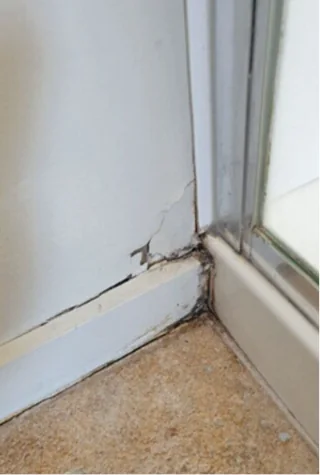
Additional visual examples
Supporting photos and diagrams for this defect topic. Actual site conditions may vary and should be assessed in context.
What this defect means
Shower leak risk refers to visible signs around a shower that may indicate poor sealing, deteriorated grout, cracked tiles, damaged linings, poor drainage, movement, staining or moisture-related deterioration.
These signs do not confirm a waterproofing failure, but they may indicate that further assessment or maintenance is appropriate.
Why it may matter for buyers
For buyers, shower-related moisture risk may matter because bathroom moisture defects may affect wall linings, flooring, skirtings, framing, adjacent rooms or areas below if moisture is ongoing or left unresolved.
Even small gaps or deteriorated sealant can increase moisture risk over time, especially where showers are used frequently.
Common visible signs
Common visible signs may include:
- Cracked or missing grout
- Deteriorated silicone sealant
- Loose or cracked tiles
- Swollen skirting or door jambs
- Staining near shower areas
- Soft or damaged flooring
- Mould-like staining
- Water escaping outside the shower area
- Poor ventilation or condensation
Possible causes
Possible causes may include:
- Ageing sealant or grout
- Poor bathroom maintenance
- Movement in tiled surfaces
- Inadequate fall to drain
- Poor shower screen sealing
- High moisture use without ventilation
- Previous incomplete repairs
- Poor original installation details
What a visual inspection can and cannot confirm
A visual, non-invasive inspection can identify visible bathroom signs of moisture risk in accessible areas observed at the time of inspection.
It cannot confirm hidden waterproofing behind tiles or linings, hidden framing condition, moisture inside closed wall cavities or the full extent of any concealed damage without further specialist assessment.
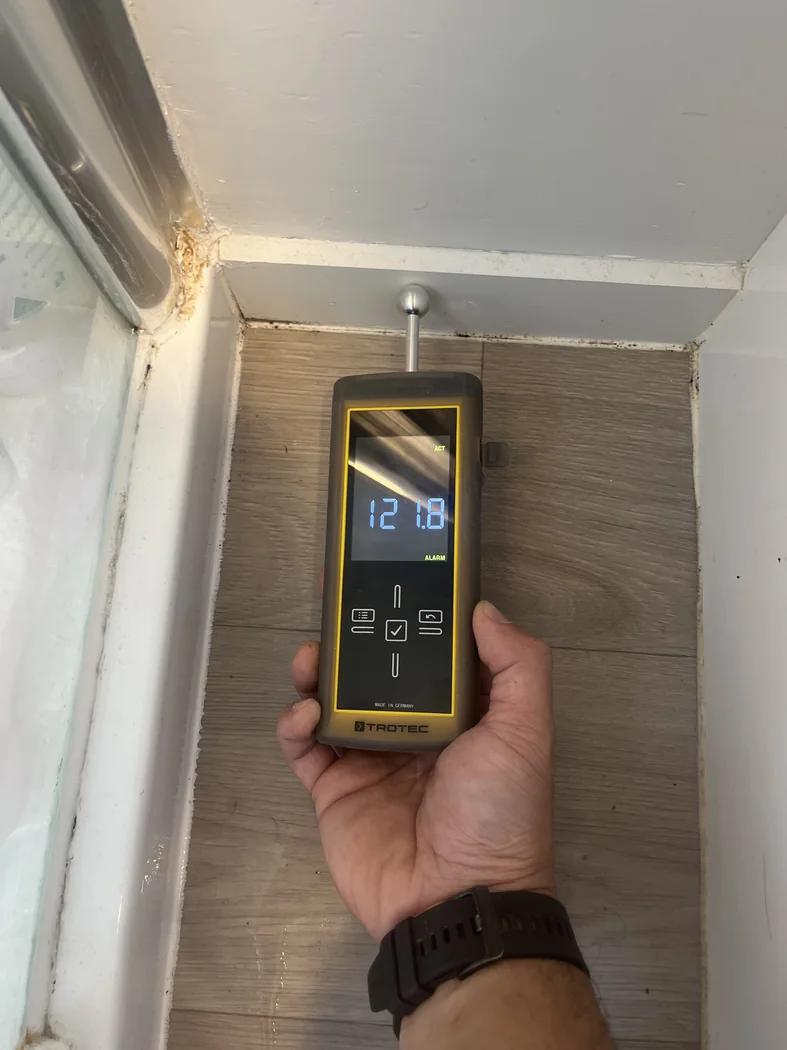
Selected moisture readings may be taken in accessible nearby areas where appropriate, but this does not amount to invasive moisture investigation.
Recommended next steps
Where shower leak risk indicators are visible, the recommended next step is to seek repair advice for obvious maintenance items such as failed sealant or grout and seek further assessment if staining, softness or higher moisture readings are recorded where accessible.
Buyers should consider the age, condition and maintenance history of the bathroom.
When further specialist advice may be appropriate
Further specialist assessment may be appropriate where:
- Staining is visible outside the shower area
- Flooring or skirting appears swollen or soft
- Tiles are loose or cracked
- Sealant or grout failure is widespread
- Moisture indicators are present in adjacent areas
- The bathroom is above another room
- Likely repair work or repair extent is uncertain
A builder, plumber, tiler, waterproofing specialist or moisture investigation specialist may be appropriate depending on the defect.
Related defect links
These related guides can help you understand connected visible moisture-risk, drainage, cladding, flashing or wet-area issues.
Read related defect guide Damp Subfloor Conditions
Read related defect guide Poorly Sealed Wall Penetrations
Read related defect guide
Bathroom moisture issues can be difficult for buyers to judge during a short viewing.
A pre-purchase building inspection can help identify visible shower and bathroom signs of moisture risk in accessible areas.
General education disclaimer
General information only. This resource does not replace a professional inspection or legal, financial, valuation, engineering or specialist advice where required.
FAQ
Does cracked grout mean the shower is leaking?
Not necessarily. Cracked grout is a visible moisture-risk indicator and should be reviewed with other signs such as staining, swelling or softness.
Can a visual inspection confirm waterproofing condition?
No. Concealed waterproofing cannot be fully confirmed during a visual, non-invasive inspection.
Are moisture readings enough to confirm the issue?
Moisture readings may provide useful indicators in accessible areas, but they do not confirm hidden waterproofing behind tiles or bathroom linings or hidden wall/floor conditions.
Who should assess shower moisture concerns?
A builder, plumber, tiler, waterproofing specialist or moisture investigation specialist may be appropriate.